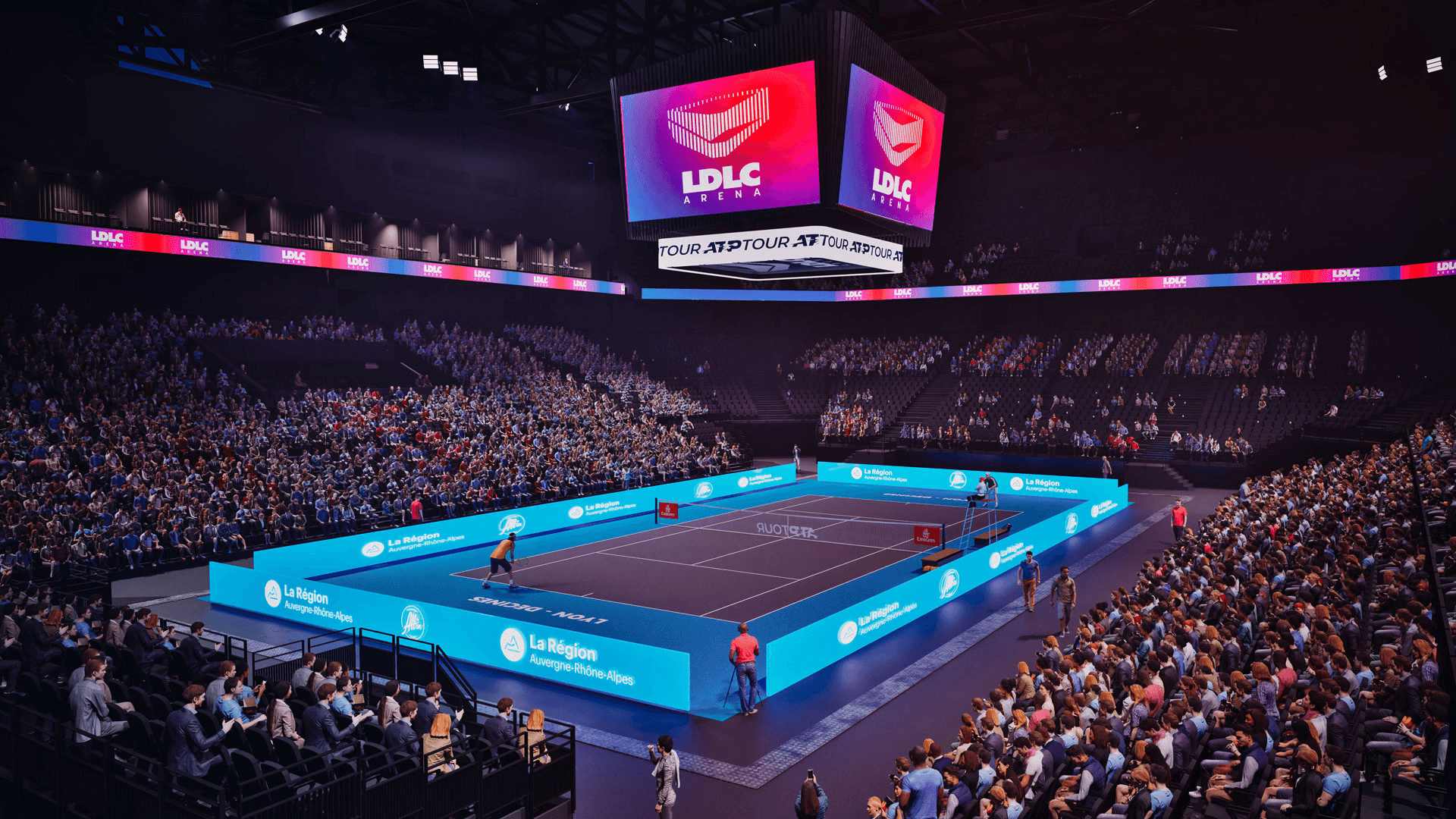
The Grand Prix Auvergne-Rhône-Alpes Guide for Fans Who Actually Care
Your complete fan guide to the Grand Prix Auvergne-Rhône-Alpes in Lyon. Tickets, hospitality, where to eat, and what to do in France's food capital.
Official guide
A concise editorial reference for guests planning a tournament visit.
The inaugural edition of Lyon's new ATP 250, in one of the most modern arenas in Europe, in the gastronomic capital of France
The Quick Verdict
Lyon is getting its own ATP 250, and the backstory alone is worth the trip. Jo-Wilfried Tsonga and Thierry Ascione, two former French professionals who know what a tennis event should feel like from the inside, have built this tournament from scratch. The venue is the LDLC Arena, a purpose-built indoor arena that opened in 2023 and is already considered one of the finest entertainment spaces in Europe. The calendar slot sits one week before Basel, Vienna, and the Rolex Paris Masters, which means players chasing ranking points and ATP Finals qualification will be competing with real urgency.
Monfils and Wawrinka are confirmed for what may be among their final appearances on the professional circuit. Ugo Humbert and Valentin Vacherot represent the new generation of French tennis. The first edition of any tournament carries a particular kind of energy, a sense of discovery and occasion that established events sometimes outgrow. Being there for the beginning of something is a rare thing in sport.
And then there is Lyon itself. The gastronomic capital of France. A UNESCO World Heritage city centre. Two hours from Paris by TGV, ninety minutes from Geneva. A city where lunch is taken as seriously as any business meeting, and where the bouchons (the small, family-run restaurants that define Lyonnaise cooking) serve dishes that have not changed in a hundred years because they were perfect to begin with. Late October in Lyon is beautiful: golden light on the Saône, autumn colours in the Parc de la Tête d'Or, and the Beaujolais harvest in the hills just north of the city.
Dates | Sunday 18 October to Sunday 25 October 2026 |
Venue | LDLC Arena, 5 Avenue Simone Veil, 69150 Décines-Charpieu (Lyon-Décines) |
Surface | Indoor hard court |
Level | ATP 250 (first edition) |
Draw | 28 singles / 16 doubles |
Capacity | 6,000 to 16,000 (modular) |
Tournament director | Thierry Ascione |
Tournament ambassador | Jo-Wilfried Tsonga |
Confirmed players | Gaël Monfils, Stan Wawrinka, Ugo Humbert, Valentin Vacherot |
General admission | €6.50 to €37.50 |
Best for | Fans drawn to the excitement of a first edition, food lovers who want to combine tennis with one of Europe's greatest dining cities, corporate groups looking for a distinctive autumn hospitality event, and anyone who wants to see Monfils and Wawrinka while they still can |
Getting Your Tickets
Tickets are available through the official tournament website at grandprix-auvergnerhonealpes.com. General admission ranges from €6.50 to €37.50, making this one of the most accessible ATP events on the calendar for casual fans and families.
The tournament runs over eight days with 28 singles players and 16 doubles teams. The finals weekend (Friday quarterfinals through Sunday finals) is where the hospitality programme operates. See the Hospitality Packages section below for VIP options.
Getting There
The LDLC Arena is located in Décines-Charpieu, east of central Lyon, within the OL Vallée complex alongside the Groupama Stadium. It is not in the city centre, but it is well connected.
By tram
Tramway T7 runs directly to the Décines OL Vallée stop, which is right at the arena's doorstep. The tram frequency is increased before and after events. From the city centre, the most practical route is Metro Line A to Vaulx-en-Velin La Soie, then transfer to T7. The total journey takes approximately 30-40 minutes from central Lyon. Alternatively, Tramway T3 runs to Décines Grand Large, from where it is an 800-metre walk to the arena, or a connection via Bus 85.
By car
The LDLC Arena is accessible via the Rocade Est (RN346), exit 7. Multiple parking areas (P1 through P7) surround the venue. Parking must be reserved in advance for event days and typically costs from €20 per car. There is no on-the-day parking available at the venue.
VIP hospitality packages include parking: one space per three tickets for Fan Bar, one space per four tickets for Les Terrasses and Le Village.
By train to Lyon
Lyon has two main stations: Part-Dieu (the main TGV hub) and Perrache (city centre). From Paris: approximately 2 hours by TGV. From Geneva: approximately 1 hour 50 minutes. From Marseille: approximately 1 hour 40 minutes. From both stations, connect to the metro and tram network to reach the arena.
By air
Lyon-Saint Exupéry Airport (LYS) handles domestic and international flights and is approximately 25 minutes from the LDLC Arena by car. The Rhônexpress tram connects the airport to Part-Dieu station in 30 minutes.
Seat Guide
The LDLC Arena opened in November 2023, conceived by Tony Parker and OL Groupe as an "American-style" arena with one of the best sound systems in France. The building is modular, configuring from 6,000 to 16,000 seats depending on the event. For tennis, the configuration will be tighter, bringing the crowd closer to the court and concentrating the atmosphere in a way that the arena's design was specifically built to achieve.
This is the first time the LDLC Arena has hosted professional tennis, so there is no established seating wisdom to draw on. What we know about the building from its basketball and concert configurations is that the sightlines are excellent from every section, the seating is comfortable by modern arena standards, and the technology (LED lighting, acoustics, screen systems) is state-of-the-art.
The premium seating category is the Carré Or (Gold Square), included with the Les Terrasses Fan Bar hospitality package. Les Terrasses and Le Village offer seats adjacent to the VIP lounges, with Le Village adding direct views of Centre Court from the lounges themselves.
No sun guidance needed. This is indoor tennis in a climate-controlled arena.
Food and Drink
Inside the arena
The LDLC Arena's hospitality programme operates through three tiers. Le Village offers private VIP lounges with Centre Court views and a cash bar. Les Terrasses provides cocktail catering, a drinks service, and dedicated hosts. The Les Terrasses Fan Bar includes cocktail catering and drinks in a dedicated space at the Fiducial Asteria, the entertainment complex adjacent to Centre Court. On Friday and Saturday evenings, the after party transforms the VIP spaces into a social event with DJ entertainment.
Standard concessions will operate throughout the arena for general admission ticket holders.
Lyon: the food
This is the section where the Grand Prix Auvergne-Rhône-Alpes guide becomes a different kind of guide entirely. Because Lyon is not a city that happens to have good food. Lyon is the city that invented the idea of a city defined by its food. The designation "gastronomic capital of France" dates to 1934, bestowed by the food critic Curnonsky, and it has never been seriously challenged. Paris has more Michelin stars. Lyon has more soul on the plate.
The bouchon is the institution that makes Lyon's food culture unique. These are small, family-run restaurants serving Lyonnaise cooking: hearty, generous, unapologetically rich, and rooted in a tradition that stretches back to the mères lyonnaises, the female cooks who established the city's culinary reputation in the early twentieth century. The tables are close together, the portions are large, the wine is from the Beaujolais or the Côtes du Rhône, and the atmosphere is warm and convivial.
The dishes to know: quenelle de brochet (a light, airy pike dumpling in a creamy Nantua sauce, and the signature dish of the city), salade lyonnaise (frisée lettuce, bacon lardons, a poached egg, and a hot vinaigrette), tablier de sapeur (breaded tripe, which is more delicious than it sounds), cervelle de canut (a fresh herb and shallot cheese spread, traditionally eaten with bread), and tarte aux pralines roses (a bright pink almond praline tart that is both beautiful and irresistible).
Where to eat: Daniel et Denise on Rue de Créqui holds the official Bouchons Lyonnais label and is run by chef Joseph Viola, whose pâté en croûte has won national competitions. Café des Fédérations near Place des Terreaux is a classic, loud, and packed at lunch. Chez Hugon on Rue Pizay is a bouchon that serves a legendary pot-au-feu. Le Musée on Rue des Forces is named for the collection of Lyon gastronomic memorabilia on its walls, and the quenelle gratin is among the finest versions available anywhere. Les Ventres Jaunes in Vieux Lyon offers a full bouchon menu (starter, main, dessert) for around €24 and is a wonderful place to begin if this is your first bouchon experience.
For something beyond the bouchons: Les Halles de Lyon Paul Bocuse is Lyon's legendary covered food market, named after the city's most famous chef. Fish counters, charcuterie stalls, cheese vendors, chocolate shops, oyster bars, and small restaurants all operate inside. Lisa Elmqvist in Stockholm has nothing on this. Come hungry and plan to graze for an hour.
For a special dinner: Têtedoie on Fourvière Hill combines gastronomic dining with panoramic views over the city. Restaurant Paul Bocuse in Collonges-au-Mont-d'Or (20 minutes from central Lyon) is a pilgrimage for anyone who cares about French cooking. Ekstedt in Stockholm cooks over fire. Bocuse wrote the book on why that matters.
What to Wear
No formal dress code for general admission. The Lyon crowd dresses with the relaxed elegance that the French do naturally. For the hospitality areas, smart casual is appropriate. Les Terrasses and Le Village are premium hospitality spaces with cocktail service and dedicated hosts. Dress as you would for a good restaurant.
Late October in Lyon is mild compared to Scandinavia or northern Europe. Daytime temperatures typically sit between 10 and 16 degrees Celsius. A light jacket and an umbrella will cover most eventualities. The arena is indoor and climate-controlled.
Things to Do Beyond the Tennis
Vieux Lyon
The old town is one of the finest Renaissance neighbourhoods in Europe and a UNESCO World Heritage Site. Narrow cobblestone streets, medieval and Renaissance buildings in warm ochre and terracotta, the Cathédrale Saint-Jean-Baptiste, and the famous traboules (hidden passageways that run through buildings and between streets, originally used by silk workers to transport their goods). Wander without a map. Get lost. Find a bouchon. This is how Lyon is best experienced.
Fourvière Hill and the Basilica
Take the funicular from Vieux Lyon metro station (a two-minute ride) to the top of Fourvière Hill. The Basilica of Notre-Dame de Fourvière has an austere exterior and an interior so lavishly decorated it takes your breath away. The esplanade outside offers a panoramic view over the entire city, the Presqu'île, the two rivers, and on clear days the Alps and Mont Blanc in the distance. Next to the basilica, the ancient Roman amphitheatre and the Gallo-Roman Museum are free to visit.
Presqu'île
The peninsula between the Rhône and the Saône is the heart of modern Lyon. Place Bellecour (the largest pedestrian square in France), Place des Terreaux (with its Bartholdi fountain), the Musée des Beaux-Arts (one of the largest fine art museums in France, housed in a former Benedictine convent), and the shopping streets of Rue de la République. The Presqu'île is Lyon's centre of gravity and the natural place to base yourself during the tournament.
Musée des Confluences
At the southern tip of the Presqu'île, where the Rhône and the Saône meet, this striking modern building houses a science and anthropology museum that is one of Lyon's most popular attractions. The architecture alone, a crystalline structure that seems to float above the water, justifies the visit.
Parc de la Tête d'Or
Lyon's great urban park. 117 hectares of gardens, a lake, a botanical garden, a small zoo, and some of the finest autumn foliage in the city. In late October, the colours are at their peak. A morning walk here before a day session at the tennis is a perfect way to start.
Beaujolais day trip
The Beaujolais wine region begins just 30 minutes north of Lyon. The villages of Fleurie, Morgon, and Brouilly produce some of France's most joyful wines, and late October is harvest season. A half-day trip to taste the new vintage and walk through vineyards turning gold is one of the most distinctive things you can add to a Grand Prix Auvergne-Rhône-Alpes weekend. Book a winery visit in advance.
Croix-Rousse
The hilltop neighbourhood north of Presqu'île, historically the silk-weaving quarter. The canuts (silk workers) operated their looms in the tall-windowed apartments along the slopes, and the neighbourhood retains a bohemian, artistic character. The Sunday morning market on Boulevard de la Croix-Rousse is one of the best in Lyon. Excellent for a pre-tennis browse if your visit includes a weekend.
Insider Tip
The Grand Prix Auvergne-Rhône-Alpes sits one week before the Rolex Paris Masters at Bercy. Lyon to Paris is two hours by TGV. If you are already planning to attend Bercy, adding a few days in Lyon for the Grand Prix is a natural extension of the trip, and you get to spend time in a city that is arguably more enjoyable to eat in than Paris (a statement that will upset Parisians and delight everyone else).
This is the inaugural edition of a tournament built by people who genuinely love tennis. Tsonga grew up in the region. Ascione directs the tournament. The LDLC Arena is brand new. The crowd will be discovering the event for the first time. First editions have a magic that return visits can never quite replicate. This is the year to be there.
Hospitality Packages
The Grand Prix Auvergne-Rhône-Alpes offers three hospitality tiers for the finals weekend (Friday quarterfinals through Sunday finals), all operating within the LDLC Arena and the adjacent Fiducial Asteria complex.
Le Village is the top tier. Private VIP lounges with direct Centre Court views, premium seating adjacent to the lounges, cash bar, and exclusive after-party access on Friday and Saturday evenings with DJ entertainment. €420pp including taxes for all finals weekend sessions.
Les Terrasses is the premium tier. Seats adjacent to the hospitality lounges, dedicated VIP entrance, cocktail catering, drinks service, and a personal host for your group. €318pp including taxes for semifinals Saturday and finals Sunday.
Les Terrasses Fan Bar is the most accessible VIP experience. Carré Or seating, a dedicated hospitality space at the Fiducial Asteria next to Centre Court, cocktail catering, drinks, and DJ after-party access on Friday and Saturday. From €198pp including taxes for quarterfinal Friday evening. One of the best-value VIP tennis experiences on the European indoor calendar.
Enquire through experience.tennis for availability, session recommendations, and booking.
Fan Reviews
Heading to the Grand Prix Auvergne-Rhône-Alpes in Lyon? This is the inaugural edition, so there are no reviews yet. Be the first. Tell us what you ate, where you sat, how the LDLC Arena felt for tennis, and whether you found a bouchon that changed your life. The best tips will make it into the guide.
Submit your Grand Prix Auvergne-Rhône-Alpes review →
Last updated: July 2026. Know something we don't? Submit a tip and we'll add it to the guide.
Ready to book?
Pair this guide with a hospitality package.
Fan Reviews
Sign in to leave a fan review.
No reviews yet. Be the first fan!