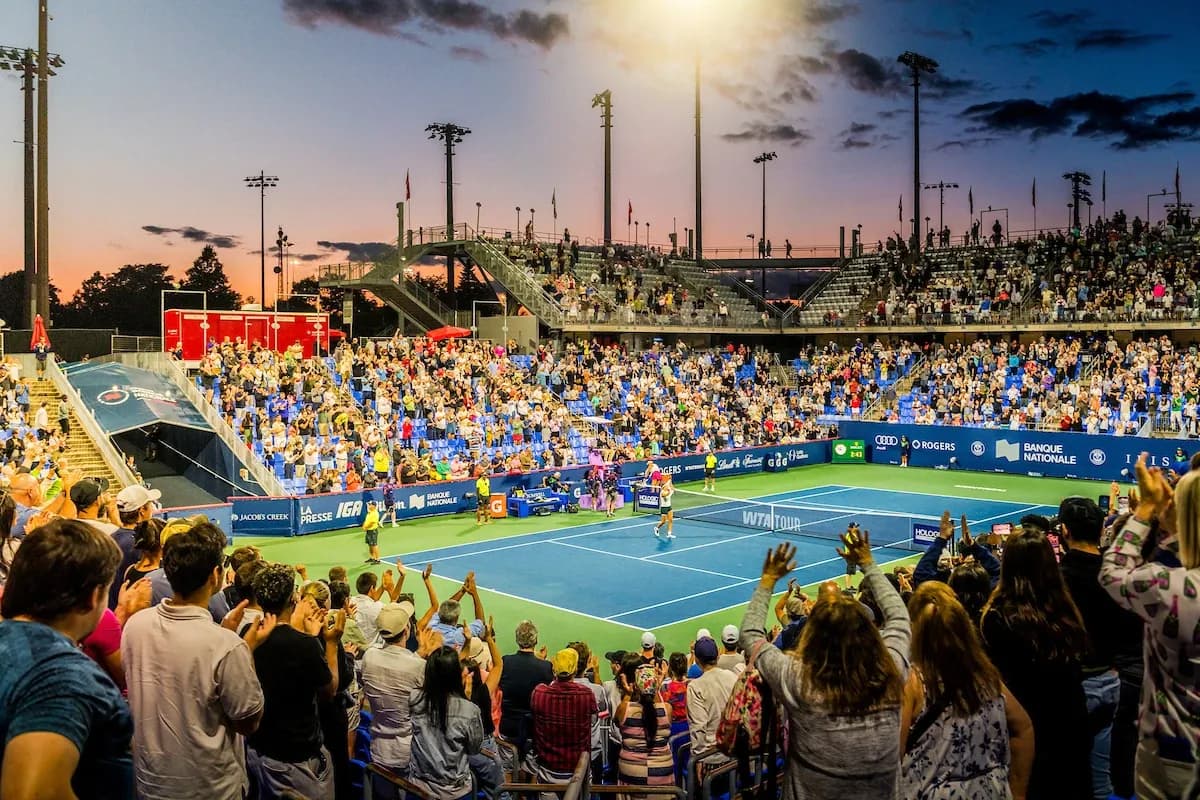
The National Bank Open Montreal Guide for Fans Who Actually Care
The National Bank Open Montreal Guide for Fans Who Actually Care
Official guide
A concise editorial reference for guests planning a tournament visit.
Everything you need to know before you go — written by fans, not PR departments
The Quick Verdict
From the F1 Grand Prix to Jazz Fest and Osheaga, summer in Montreal is packed with iconic events — and the National Bank Open proudly stands among them. That positioning is earned. The National Bank Open is one of the best sports events on the North American summer calendar, full stop. Two weeks of Masters 1000 tennis in a city that genuinely knows how to enjoy itself, at a venue that has been hosting the world's greatest players since 1981, with food, music, and an atmosphere that makes the grounds as enjoyable as the matches. Starting at $15 for a reserved seat, this experience has never been more accessible.
The tournament alternates between Montreal and Toronto — the 2026 National Bank Open ATP Tour will be played August 1st through August 13th at IGA Stadium. Montreal gets the men's draw in even-numbered years, and 2026 is an even-numbered year. The timing is perfect: the North American hard court swing is heating up, Wimbledon is recent enough that players are still in peak form, and the US Open is close enough that every match carries genuine stakes. The tennis in Montreal in August is as good as the tour gets outside the Grand Slams.
Dates | 1 — 13 August 2026 |
Venue | IGA Stadium, 285 Gary-Carter Street, Jarry Park, Montreal, Quebec H2R 2W1 |
Surface | Hard court (outdoor) |
Draw | ATP Masters 1000 — 96 players |
Best for | Anyone who wants world-class tennis in one of North America's great summer cities, at a fraction of Grand Slam prices and crowds |
Getting Your Tickets — Read This Before You Do Anything Else
The Basics
In Montreal, free grounds passes are available on the day as well as reserved seating on the main show courts starting for as little as $15. This is one of the most fan-friendly ticketing structures of any top-level tennis event on the planet. You can walk into a Masters 1000 tournament for free, watch matches on the outer courts, and have a genuinely excellent day without spending anything on entry.
For reserved seats, tickets are sold through Ticketmaster and the official National Bank Open website. Ticket options provide you the flexibility to hand pick the products that best suit your schedule, your passion for tennis, and your budget.
Centre Court vs Rogers Court
Centre Court is where each day's featured matches are played with the biggest stars in tennis and the best players in the world taking centre stage. The IGA Stadium has two main courts — Centre Court with 11,800 seats and Rogers Court with 4,296 seats.
A Centre Court ticket also gives access to Level 200 on Rogers Court and the other match courts around the grounds on a first-come-first-served basis. This is an important practical point: a Centre Court ticket is genuinely flexible and lets you move around the grounds between sessions.
Rogers Court — once the tournament's best-kept secret — places you right at the heart of the action with its intimate atmosphere. It hosts both singles and doubles matches featuring rising stars as well as established players. A Rogers Court ticket is worth considering for the first week when the draw is still wide open and the atmosphere on the smaller court can be exceptional. A Rogers Court ticket grants access to all other courts on site, except for Centre Court.
Free Public Transit — This is Not a Small Thing
Your ticket includes free access to public transportation to and from the venue on the day of your session on the STM network. This benefit applies to all ticket holders and removes the transport cost from your day entirely. Bring your ticket, show it on entry to the metro, and travel to and from the tournament for free.
The Format — 12 Days, 21 Sessions
This summer, the NBO begins a new chapter in its rich history: 12 days, 96 players, and more unforgettable moments. The tournament runs all sessions from August 1 to 13, 2026. The expanded 12-day format gives you significantly more options for attendance than the old eight-day structure — more sessions, more price points, and more chances to be there for a high-stakes match.
Getting There — Public Transit is the Only Sensible Choice
Located in the heart of Jarry Park, one of Montreal's largest green spaces, IGA Stadium has been hosting the world's greatest tennis players since 1981 and is easily accessible via public transportation and by bike.
If you are coming via metro, make your way to the De Castelnau station on the blue line. The Jarry metro station on the orange line is also nearby and is about a 20-minute walk to the main entrance. De Castelnau is the cleaner option — a shorter walk through a pleasant residential neighbourhood on the edge of Little Italy.
Parking in and around IGA Stadium is extremely limited. The tournament strongly recommends using public transportation. This is not a disclaimer — it is genuine advice from people who have watched thousands of fans make the mistake of driving. The combination of free transit on your ticket and the metro's directness makes this an easy decision.
In total, 252 free bicycle parking spots are located at the Gary-Carter entrance. If you are based in the Plateau, Rosemont, or Mile End and the weather is good, cycling to IGA Stadium is one of the more enjoyable ways to arrive at a sporting event anywhere in North America. Montreal's cycling infrastructure is excellent and Jarry Park is a natural destination.
Arrival timing: The tournament recommends arriving 60 to 90 minutes ahead of the scheduled time of your first ticketed match. That ensures you will have enough time to enter the stadium, go through security and bag check, explore the site and activations, grab food and drinks, and make the walk to the court for the start of play.
Seat Guide — Where to Sit and What to Avoid
Centre Court
IGA Stadium is an outdoor stadium with 11,800 seats on Centre Court. The bowl is well-designed and keeps even the upper tiers connected to the action in a way that larger outdoor venues — the US Open's Arthur Ashe being the obvious comparison — struggle to replicate.
Sun guidance: To have shade during the day session, it is best to sit in the top rows on the south and west sides of the stadium. At night, once the sun sets, it is best to sit on the west side of the stadium. Seats on the West Side of the stadium will be on the side of the umpire and provide the best chance for protection from the sun. Sections on the West Side include 126-133 in the lower level and 331-324 in the upper level.
The practical implication: if you are attending a day session in early August Montreal heat, the west side of the stadium is significantly more comfortable than the east. The sun in Montreal in August is genuinely intense — this is not a minor consideration.
Level structure: Level 100 is the lower bowl, Level 200 is the middle tier, and Level 300 is the upper tier. Level 100 is the most immersive experience and puts you closest to the players. Level 200 rows A through E — the front rows of the middle tier — offer a sweeping elevated view that many regulars prefer for the tactical perspective it provides. Level 300 is the highest and most affordable option and still delivers a perfectly readable view of the full court.
Rogers Court
Rogers Court at 4,296 seats is one of the more intimate second courts on the Masters 1000 circuit. In the first week it regularly hosts matches that would be quarterfinals at smaller events, and the atmosphere when a top-10 player is on court here with a small, vocal crowd close to the action is genuinely special. If you want to be close to the players without the cost of a Centre Court premium ticket, a Rogers Court reserved seat in the first week is the recommendation.
No Roof
IGA Stadium has no retractable roof. Rain delays are a real possibility in August in Montreal — there have been years with rain early in the tournament that pushed matches back a day or so. If a session is interrupted due to weather before the end of the first match or before 90 minutes of play, the ticketing team will contact session ticket holders with available credit options valid for this year or next year. Pack a light waterproof for any outdoor session and check the forecast the morning of your attendance.
Food and Drink — The Honest Guide
The food situation at the National Bank Open is one of its genuine strengths. The NBO serves up local flavours with food trucks, bistros, and cocktails for an offering that will keep you coming back for more.
For the first time in 2026, fans will have access to a bistro with table service and a terrace overlooking the matches on Rogers Court — a unique blend of sport and gastronomy. This is a genuinely interesting new addition for 2026 and worth seeking out for a mid-session meal with a view.
The on-site food ranges from Mexican bowls and pizza to burgers, hot dogs, and a range of Asian options. On the drinks side, there is Moët and Chandon on an elegant terrace — the perfect spot to enjoy a glass of Champagne in a vibrant summer atmosphere — alongside a Distillerie 3 Lacs-themed bar serving gin cocktails, and Bar Express for beer and refreshments. The signature tournament cocktail for 2026 is the Strawberry Smash, which is worth trying at least once.
One critical rule: Alcohol is not permitted on-site in either city and will be confiscated at entry. Do not arrive with wine or beer in your bag. The on-site bar options are well-stocked and reasonably priced by tournament standards.
Bringing your own food: Bringing a small snack and water is allowed. Water bottles must be empty on entry unless they are sealed. There are water refill stations on the grounds. A packed lunch is entirely fine and the picnic culture at IGA Stadium is relaxed and welcoming.
Beyond the stadium — Little Italy is next door: IGA Stadium sits in Jarry Park adjacent to Montreal's Little Italy neighbourhood, which has some of the best restaurants in the city within a short walk. Mediterranean excellence finds its home in intimate Little Italy spots where terraces come alive in the summer days. For dinner after an evening session, the neighbourhood around the Jarry and De Castelnau metro stations has genuine depth — Greek rotisserie, vegan ramen, modern pan-Asian, Roman-style pizza — all within a five to fifteen minute walk from the gates. This is one of the great advantages of attending a tournament in a real city neighbourhood rather than a suburban sports complex.
What to Wear
Casual is correct. August in Montreal is warm and humid — temperatures regularly reach the high 20s to low 30s Celsius during the day, with genuine heat during afternoon sessions. Pack sunscreen and a hat because when the sun is out it can feel very hot.
If you are attending an evening session, a light jacket or extra layers can help keep you warm when the sun goes down. Montreal evenings in August can cool significantly after sunset, particularly when there is a breeze through the park. The swing from afternoon heat to a cool evening is a genuine range.
Comfortable shoes for walking around the grounds are worth prioritising. The IGA Stadium grounds are spacious and a full day moving between courts, food areas, and fan zones involves more walking than most people expect. No formal dress code applies to any general admission area.
The phone situation: The NBO uses mobile ticket access, so make sure your phone is fully charged or pack a portable charger to ensure you can access your tickets all session long. Smartphone charging stations are available on site but a portable charger is a more reliable solution for a full day. The combination of using your ticket, navigating the grounds, and photographing the tennis will drain a standard phone battery faster than you expect.
Things to Do Beyond the Tennis
From a tennis-themed Fan Zone to live music on the main stage, a star-studded ball hockey game, and a wide range of theme days, there is plenty of entertainment on offer away from the match courts. The National Bank Open takes its off-court programming seriously — the grounds are designed to be worth spending time in rather than simply transiting through.
The Fan Zone has interactive tennis activities across all skill levels and ages. Fans are greeted by an oversized umpire's chair overlooking a locker room and other tennis paraphernalia. The merchandise kiosks and the Tennis Giant on-site retail are worth time if you are looking for equipment or tournament souvenirs.
Montreal in August: From the F1 Grand Prix to Jazz Fest and Osheaga, summer in Montreal is packed with iconic events. The Jazz Festival typically finishes in early July, but the city's summer energy carries through August with outdoor concerts, terrace culture, and a general sense of a city making the most of its short warm season.
The Plateau-Mont-Royal neighbourhood is a 20-minute metro ride from IGA Stadium and has some of the best eating, drinking, and street art in Canada. Mont-Royal Park — the hill that gives the neighbourhood its name — is a 30-minute walk from the Plateau and offers the best view of the Montreal skyline. Old Montreal along the St Lawrence River is about 25 minutes by metro and beautiful in the evening. If you are extending the trip, the Eastern Townships wine region is about 90 minutes east by car and worth a day.
The Best Day to Attend
The second week is where the tennis peaks and the stadium fills with the most knowledgeable crowd. The quarterfinal and semifinal sessions — typically in the second week from around August 8 onwards — deliver the highest concentration of quality tennis per session and the most electric atmosphere of the tournament.
For value and variety, the first week is the better choice. Multiple courts running simultaneously, a wide open draw, the possibility of seeing a top seed in an upset situation on a smaller court, and ticket prices at their most accessible. A first-week grounds pass combined with the free transit benefit and dinner in Little Italy afterwards is one of the best-value days of tennis available anywhere on the ATP tour.
The one session worth targeting specifically if you can only attend once: a second-week evening session on Centre Court. Evening sessions are ideal if you are seeking a high-energy atmosphere. The late afternoon into evening is when the energy builds, especially during prime-time matches. A Montreal evening in August, the floodlights on, a full Centre Court crowd, and the world's best players competing with US Open implications — it is a hard evening to improve upon.
Hospitality Packages
The National Bank Open's VIP hospitality lineup for 2026 ranges from the Level 200 Gourmand with included dining from CAD $1,725, through the new Belvédère Banque Nationale with gourmet stations and court views from CAD $8,250, to the On-Court Seats — entered through the players' tunnel with Champagne on arrival — from CAD $9,705. For corporate entertaining, the 12-day format gives the National Bank Open a specific advantage over single-week events: the NBO's 12-day format provides the luxury of creating deeper connections with your clients. There is time between matches and the clock does not hit zero in tennis. We have curated all six packages here — view National Bank Open hospitality packages.
Fan Reviews
This section grows with every tournament. Be the first to share your National Bank Open experience — submit a review after attending and help the next fan plan their trip.
Submit your National Bank Open review →
Last updated: May 2026. Know something we don't? Submit a tip and we'll add it to the guide.
Ready to book?
Pair this guide with a hospitality package.
Fan Reviews
Sign in to leave a fan review.
No reviews yet. Be the first fan!