The Mutua Madrid Open Guide for Fans Who Actually Care
The Mutua Madrid Open Guide for Fans Who Actually Care
Official guide
A concise editorial reference for guests planning a tournament visit.
Everything you need to know before you go — written by fans, not PR departments
The Quick Verdict
Madrid is tennis's most interesting Masters event. It sits at 650 metres above sea level, which does something genuinely weird to the ball — serves travel 15-20% faster than at sea level, shots carry deeper, and patterns of play that work in Paris or Rome simply don't work here. Players who've prepared meticulously for the clay swing sometimes get undone in the first week. First-time visitors often see results they can't explain. That's part of what makes attending Madrid special: it's consistently unpredictable. Add a world-class city, a venue with three retractable-roof courts, and a combined ATP/WTA draw that means you get twice the tennis in a day, and you have one of the most compelling weeks on the tour.
Dates | 20 April — 3 May 2026 |
Venue | Caja Magica (La Caja Magica), Avenida de Tenis s/n, Madrid 28045 |
Surface | Clay (outdoor) |
Best for | Clay season fans, city lovers, people who want top-level tennis in a manageable venue with a great city around it. |
Getting Your Tickets
Tickets are sold through the official Mutua Madrid Open website at mutuamadridopen.com. General admission and reserved seats for the Manolo Santana Stadium (the main court) go on sale in winter. Ticket prices range from around €24 for early round qualifying on outer courts to €181 for Finals day on the Manolo Santana. Day and night sessions are sold separately for the main court.
VIP options include Platinum Seats — the first two rows of the B level section on the east side of Manolo Santana, with access to the VIP Platinum Lounge. Sky Seats are the premium hospitality option. Both include full catering. For hospitality packages through official operators, expect €300-1,500+ per person depending on round and inclusion level.
Pro tip: the second week (from Tuesday 28 April onward) is when the draw narrows and the best matches come. Getting a ticket for the Round of 16 or quarterfinals gives you marquee names on the main court at a fraction of the Finals price. The semifinals (both ATP and WTA on the same days) are arguably the best single day of the tournament.
Getting There
Caja Magica is in the Manzanares Park area in the south of Madrid, about 8km from the city centre. Metro Line 3 from central Madrid (Sol or Embajadores) to San Fermin-Orcasur station, then a short walk. From Plaza de España the journey takes about 20-25 minutes. The number 180 bus service also runs directly between Plaza de Legazpi and Caja Magica on match days, timed to coincide with sessions.
Driving is possible but the surrounding area gets congested on big match days. The metro is cleaner. Taxis and Uber are fine for evenings when the metro feels like too much.
Seat Guide — Where to Sit
Manolo Santana Stadium
The main show court with a retractable roof and capacity of just over 12,500. The intimacy is one of Madrid's best features — the stadium is steep and curved, with no bad sightlines. The lower bowl courtside sections are the premium seats; the upper tier mid-court is excellent value for an unobstructed view of the full court. VIP Platinum seats on the east side of the B level are among the more comfortable premium experiences on the Masters circuit.
Arantxa Sanchez-Vicario and Manolo Orantes Courts
The second and third show courts, both with retractable roofs. The combined ATP/WTA format means these courts host serious matches throughout the week. Check the order of play the evening before — on some days, the most interesting match of the day is on court two, not the Manolo Santana.
Outer Courts
Any main court ticket includes access to the outer courts. Early rounds see a mix of qualifying and first-round ATP/WTA matches on the smaller courts, often with no barriers and genuinely courtside access. Worth spending a session wandering the outer courts in the first few days — you'll see players you'd pay a premium for at any other venue, at close range, for free with your main ticket.
The Altitude Effect — What to Actually Expect
At 650m above sea level, Madrid plays like no other clay court event. The thinner air means the ball comes through faster — particularly important on serve, where ball speed can increase noticeably compared to Paris or Rome. This tends to benefit aggressive baseliners over grinders, and younger players who adapt quickly often shine here. Carlos Alcaraz, for instance, grew up acclimatised to altitude in Spain and the Madrid courts suit his style well. If you're a tennis tactics nerd, Madrid is the best event on the clay swing to study why the same players can look so different from one week to the next.
Food and Drink
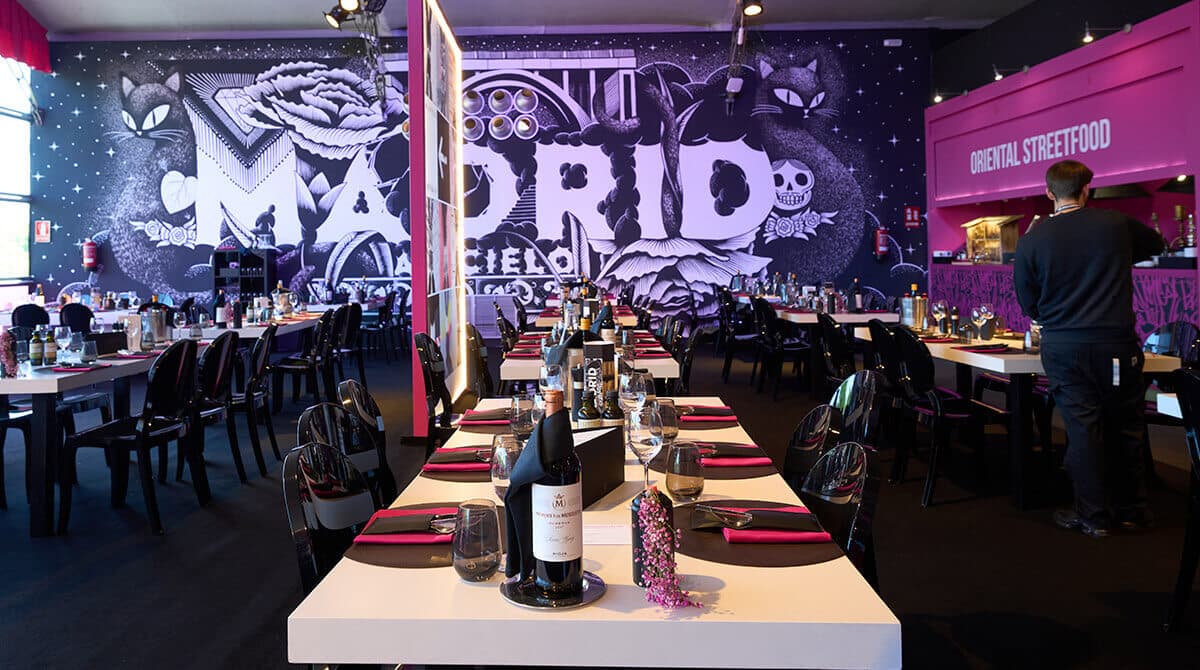
The food at Caja Magica is standard tournament fare — serviceable but not special. There are food and drink options throughout the grounds, and the fan zones have a reasonable range. The better strategy is to eat properly in Madrid before or after the tennis, which is effortless in a city with one of Europe's great food cultures.
Madrid for eating: the Mercado de San Miguel near Plaza Mayor is the tourist option but genuinely good for a quick meal. For a proper dinner, the Barrio de las Letras (Literary Quarter) has excellent mid-range restaurants. For the full experience, a late-night dinner after the evening session — Madrileños eat at 10pm without apology — is the correct way to end a day at the tennis.
What to Wear
Madrid in late April and early May is warm — highs typically around 18-22C, occasionally touching 25C. Smart casual, light layers, and comfortable shoes. Evenings can be cool, especially later in the tournament and in the shade. Bring a jacket for night sessions. Rain is possible but the three retractable roofs mean any main court match will continue regardless.
Things to Do Beyond the Tennis
Madrid during the Open fortnight is one of the better sporting travel experiences in Europe precisely because of the city around it. The Prado Museum is 30 minutes from the venue and houses one of the world's great art collections — Goya, Velazquez, Bosch. The Reina Sofia (Picasso's Guernica) and the Thyssen-Bornemisza complete what's informally called the Golden Triangle of Art, all within walking distance of each other.
One note unique to 2026: a clay court has been installed at the Estadio Bernabeu for player practice sessions from 23-30 April. The combination of watching Alcaraz practice at the home of Real Madrid is, by any measure, an unusual travel experience.
Hospitality Packages — Worth It?
Madrid's hospitality offering is solid and more affordable than the Grand Slams. The VIP Platinum Lounge with Platinum Seats is probably the best version — a proper premium experience without Grand Slam pricing. Official hospitality operators offer packages from around €400-500 per person for earlier rounds including lunch and premium seats. For the Finals, expect €1,000-1,500+. We've curated a selection — view hospitality packages here.
Fan Reviews
This section grows with every tournament. Be the first to share your Mutua Madrid Open experience — submit a review after attending and help the next fan plan their trip.
Ready to book?
Pair this guide with a hospitality package.
Fan Reviews
Sign in to leave a fan review.
No reviews yet. Be the first fan!