The Italian Open Guide for Fans Who Actually Care
The Italian Open Guide for Fans Who Actually Care
Official guide
A concise editorial reference for guests planning a tournament visit.
Everything you need to know before you go — written by fans, not PR departments
The Quick Verdict
The Italian Open at the Foro Italico is the Grand Slam of Masters events. Not officially, but in spirit. It's been running since 1930, it's surrounded by fascist-era statuary that you don't quite know what to make of, it sits at the foot of Monte Mario with a view across Rome, and the clay here — at lower altitude and in the warmth of a Roman May — plays as clay is supposed to play. Long rallies, heavy topspin, tactical chess between the world's best players, and a crowd that understands what it's watching. The week between Madrid and Roland Garros is the best week in tennis for fans who love the clay season. Rome is where the gladiators prepare for Paris.
Dates | 6 — 17 May 2026 |
Venue | Foro Italico, Viale del Foro Italico, Rome 00135 |
Surface | Clay (outdoor, no roof) |
Best for | Clay court devotees, Rome lovers, fans who want Grand Slam quality tennis at Masters prices. |
Getting Your Tickets
Tickets are sold through the official Italian Open website at internazionalibnlditalia.com. The tournament operates day and night sessions on the main Campo Centrale. Prices are among the most reasonable on the Masters circuit — qualifying passes start at around €5, grounds passes for main draw action range from €20-45 depending on the day, and Campo Centrale night session finals tickets top out at around €140.
The tournament now runs an extended 12-day format with 96 players in the draw. The expanded format means more matches, more days, and more opportunities to attend across a wider range of price points. Early rounds on the outer courts (first week, grounds pass) deliver extraordinary value — world-class clay court tennis at close range for pocket change.
Official hospitality is available through Club Suite packages and Gold/Platinum Finals options, from around €300 upwards. For the Finals day which holds both the men's and women's singles finals, expect €150-400+ for standard reserved seating, more for VIP.
Getting There
The Foro Italico is in the north of Rome, about 30 minutes from Roma Termini. Metro Line A to Ottaviano station, then bus number 32 (direction Saxa Rubra) to the De Bosis/Stadio Tennis stop — the whole journey takes around 45 minutes from the centre. If you're arriving by Frecce (Italian high-speed train) into Termini, there's a dedicated shuttle service to the Foro Italico when you show your train ticket alongside your tournament ticket.
The venue is on the Tiber riverbank, which makes a riverside walk an option for those with time and comfortable shoes. Not the fastest route but Rome's Tiber walk in May is a pleasant thing to do.
No official parking at the venue. Driving is not recommended. The bus and metro combination is far more reliable.
Seat Guide — Where to Sit
Campo Centrale
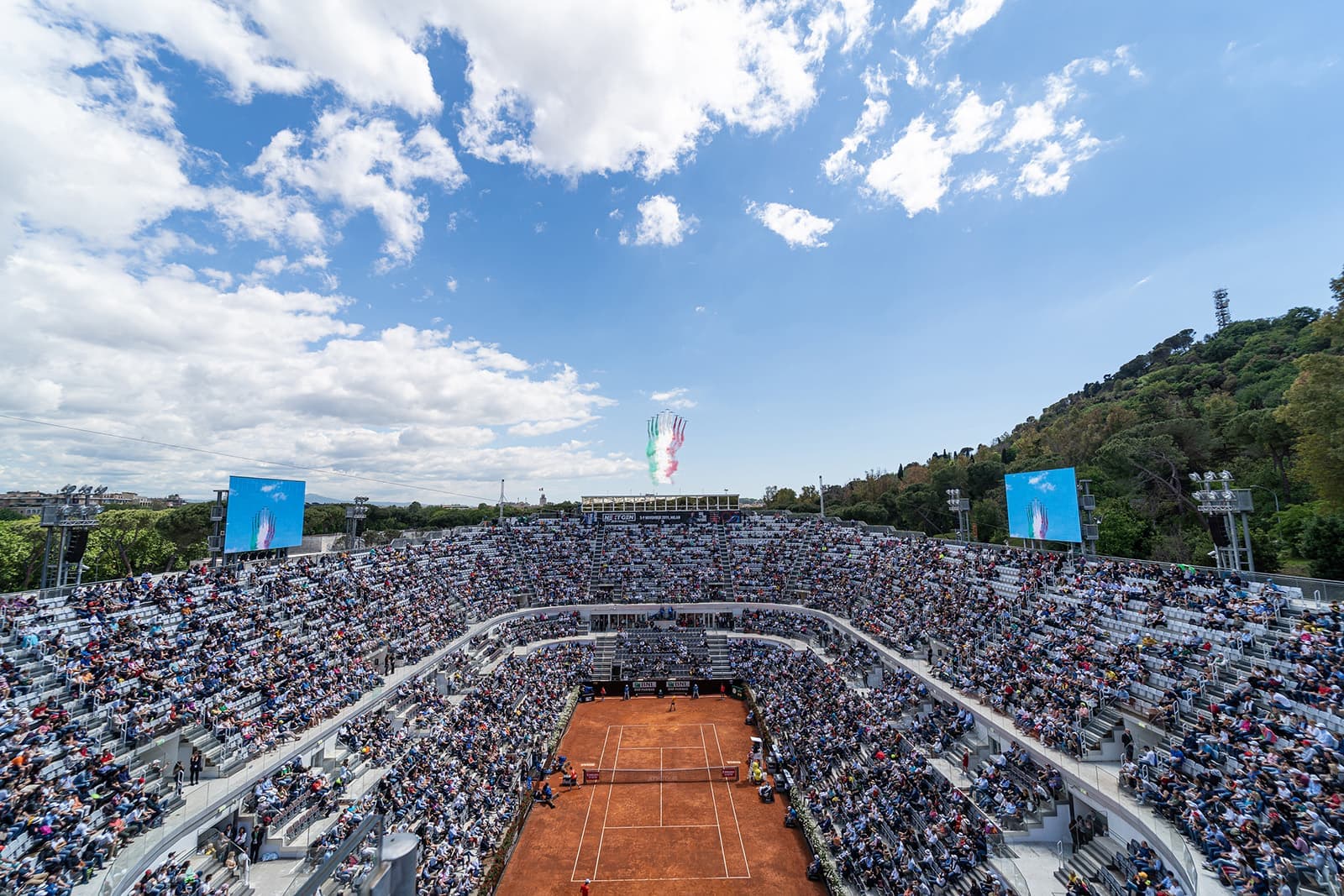
The main show court holds around 10,400 spectators and is one of the more dramatic settings in professional tennis. The steep terracing means every seat has a clear sightline. The Monte Mario side of the court (to the left when facing the court from the main entrance) gets the most shade as the afternoon progresses — preferred for day sessions. The general admission terrace at the very back is exactly what it sounds like but still gives you a reasonable view for the price.
There are no bad seats at Campo Centrale. It's small enough that even the furthest spots feel close.
Stadio Pietrangeli and SuperTennis Arena
The Pietrangeli is a historic 3,500-seat stadium that has hosted some of the tournament's most famous matches. The SuperTennis Arena, added in 2025 and carved into the Stadio dei Marmi — a stadium famously ringed by 60 marble athlete statues — is one of the more unusual tennis settings in the world. Both courts host televised matches and significant singles contests throughout the week. Worth checking the order of play for both — you may find a quarterfinal or better here that you can watch in an intimate setting.
The Foro Italico Itself
The venue was built in the 1930s as a showpiece sports complex, and the history is everywhere. The marble statues, the mosaics, the architecture — it all has a certain grandeur that's hard to categorise and impossible to ignore. Whatever your feelings about the history, the Foro Italico in May is one of the more atmospheric venues in world sport. Give yourself time to walk the grounds properly. The view from the terrace above Campo Centrale across to Monte Mario and Rome is worth the trip on its own.
Food and Drink
The tournament food is solid by tennis standards — better than Roland Garros, roughly on par with Wimbledon. Italian staples (pizza, pasta, arancini) are available and reasonably priced. There are bars throughout the grounds. The food courtyard area near the outer courts is a good spot for a break between matches.
Rome as a food city needs no introduction. The Prati neighbourhood is a 20-minute walk from the Foro Italico and has excellent mid-range trattorias — arrive after the evening session (Italian dinner starts at 8pm at the earliest) for a genuinely good meal. For the full experience: a cacio e pepe in a small trattoria with no English menu, the Tuesday after a good day's clay court tennis, is among the better things you can do in sport.
What to Wear
Smart casual. Rome in May is warm — typically 20-25C during the day, cooler in the evenings. Comfortable shoes are essential; the Foro Italico grounds are large and you'll walk more than you expect. Sunscreen for day sessions. No retractable roof means bring a light waterproof — May in Rome occasionally produces afternoon thunderstorms that can delay play on the outer courts. Campo Centrale matches stop; everything else waits.
Things to Do Beyond the Tennis
Rome. You do not need a guide for Rome. The Colosseum, the Vatican, the Pantheon, and the Borghese Gallery (book the Borghese in advance — it's capacity-controlled and one of the finest collections of Bernini sculpture in existence) are all within a city that rewards walking. The recommendation: arrive a day or two before the tennis starts, walk the historic centre, then use the tournament as a rhythm to your days — tennis in the afternoon, evening in the city.
Hospitality Packages — Worth It?
Rome's hospitality options offer genuine value relative to the Grand Slams. Club Suite packages and the various Premium Finals options combine reserved seating with catered dining and VIP lounge access at prices well below comparable experiences in Paris or London. For fans who want a premium experience without Grand Slam pricing, Rome may be the best Masters option. We've curated a selection — view hospitality packages here.
Fan Reviews
This section grows with every tournament. Be the first to share your Italian Open experience — submit a review after attending and help the next fan plan their trip.
Submit your Italian Open review →
Last updated: April 2026. Know something we don't? Submit a tip and we'll add it to the guide.
Ready to book?
Pair this guide with a hospitality package.
Fan Reviews
Sign in to leave a fan review.
No reviews yet. Be the first fan!