The Cincinnati Open Guide for Fans Who Actually Care
The Cincinnati Open Guide for Fans Who Actually Care
Official guide
A concise editorial reference for guests planning a tournament visit.
Everything you need to know before you go — written by fans, not PR departments
Quick Verdict
The Cincinnati Open is the most underrated Masters event on the calendar. It has the full field, the courts, the history, and since a $260 million transformation doubled the footprint of Lindner Family Tennis Center, it has the infrastructure too. What it does not have is the inflated reputation and price tag of Indian Wells or Miami. You get world-class tennis in a city that is genuinely happy to have you, at a venue compact enough to walk the whole thing in twenty minutes. The catch is August in Ohio: it is hot, humid, and relentless during day sessions. Come prepared for that, and this is one of the best weeks in tennis.
At a Glance
Dates | 11–23 August 2026 |
Venue | Lindner Family Tennis Center, Mason, Ohio |
Surface | Outdoor hard court (DecoTurf II) |
ATP Level | Masters 1000 |
WTA Level | WTA 1000 |
Draw Size | 96 singles (both tours) |
Ranking Points | 1,000 (singles champion, both tours) |
First held | 1899 |
Best for | Fans who want the full ATP/WTA field without the Grand Slam price premium |
Getting Your Tickets
Tickets are sold through the official Cincinnati Open website and Ticketmaster. The tournament runs sessions across two weeks: qualifying begins August 11, main draw play starts August 13, with both the ATP and WTA finals on August 23.
Sessions are structured as day (starting around 11 a.m.) and night (starting around 7 p.m.). Each single-session ticket includes access to Center Court for that session as well as general entry across the grounds, which means you can walk to Grandstand Court and the outer courts between matches.
Day sessions earlier in the tournament are the best value. You get multiple matches across the draw on all courts, the crowds are manageable, and you have the freedom to roam. Quarterfinal and semifinal sessions sell out quickly, particularly on the weekend. Finals tickets go fast regardless of how you buy them; if the finals are the priority, book well in advance.
Night sessions have a different energy: the heat drops, the atmosphere tightens, and you typically get one marquee match on Center Court. Good for a standalone evening. Less good if you want volume of tennis.
For premium hospitality packages with reserved seating, see Cincinnati Open Hospitality Packages.
Getting There
By air: Cincinnati/Northern Kentucky International Airport (CVG) is the main gateway, roughly 45 minutes south of Lindner Family Tennis Center. Dayton International (DAY) is an alternative for those coming from the north. Rideshare from CVG to Mason runs around 35 to 45 minutes depending on traffic.
By car: The venue is at 6100 Legacy Park Way, Mason, OH 45040. From I-71, take Exit 25 onto SR-741 and follow Tournament Road to the complex. On-site parking is available and currently provided free of charge, though it fills quickly for night sessions and weekend day sessions. Designated rideshare pick-up and drop-off is at the North Parking Lot; this is genuinely the most stress-free option if you do not need the car during the day.
From downtown Cincinnati: About 30 to 45 minutes by car or rideshare heading north. If you prefer public transit, the Metro's 71X bus (Kings Island Express) runs from downtown Cincinnati in the direction of Mason, though schedules are limited and the journey takes over an hour with connections. For most visitors, a car or rideshare is the practical choice.
Shuttle service: Two nearby hotels run complimentary daily shuttles to the venue for guests: check the official hotel partners page for current options, as these change year to year. If you are staying in Mason and can access the shuttle, it removes the parking consideration entirely.
One practical note: the walk from the outer parking lots to the gates is longer than it looks. Arrive early if you are attending with anyone who finds long walks difficult, or use the rideshare drop-off instead.
Seat Guide
Lindner Family Tennis Center has four permanent stadia and 16 match courts in total, which is a serious piece of infrastructure. Only Wimbledon, Roland Garros, the US Open, and the Australian Open have more than two permanent stadia. That context matters when you are deciding where to watch.
Center Court (capacity 11,600): The main stadium, built in 1981 and expanded several times since. The 100-level sections wrap around the court and provide the best views for reading the tennis. Sections 101 to 132 cover the full perimeter at court level; baseline sections (103, 113) are the most desirable for watching serve and groundstroke patterns. The 200-level is a solid middle ground between proximity and full-court perspective. The 300-level offers a comprehensive bird's-eye view of rallies; this is where you understand court geometry most clearly, though individual player detail becomes harder to read. All levels are covered by natural shade during some portion of the day depending on time of session; the north baseline tends to get more shade during afternoon play.
Grandstand Court (capacity 5,000): Built in 1995 and one of the better secondary courts at any Masters event. Sightlines are good throughout, and the intimacy of a 5,000-seat venue means you are never far from the action regardless of where you sit. In the first week, this is where upsets happen. The Grandstand Club premium section is on this court.
Court 3 (capacity 4,000): A substantial show court that handles a significant portion of the first-round and second-round schedule. Worth a visit early in the week when top players can end up here.
Court 10 (capacity 2,000): The smallest of the permanent stadia. Visible from the Overlook Box Lounge and the 1899 Club's Grandstand observation window.
The outer practice courts are accessible and worth building time around during the first few days. Players practice with considerably less ceremony than at Grand Slams, and the proximity to touring professionals is one of the things fans consistently cite as a Cincinnati Open strength.
Food and Drink
The Cincinnati Open has one of the better food programmes of any ATP/WTA event, partly because the tournament has put real work into sourcing local and regional operators rather than defaulting to generic stadium catering.
The headline items on the general concourse are worth knowing. Skyline Chili is a Cincinnati institution and should be treated as mandatory at least once: the city's distinctive Cincinnati-style chili, served over spaghetti or on a hot dog, with mounds of shredded cheddar cheese. Order a three-way (spaghetti, chili, cheese) and be prepared to form an opinion. Graeter's Ice Cream is the other local essential, a Cincinnati family business since 1870 and particularly famous for its chocolate chip flavour, where "chip" means irregular hand-broken chunks rather than standard morsels. LaRosa's Pizzeria is the city's most beloved pizza brand and a tournament fixture. Jeff Ruby's Catering brings wagyu burgers and shrimp cocktail from one of Cincinnati's most celebrated steakhouse groups, which is a sensible choice if the Skyline queue is long.
For Italian, Alfio's Buon Cibo serves house-made gnocchi and fresh empanadas, and is a quieter alternative to the main food court. Kala Greek Grill has become a tournament fixture with its gyros and house tzatziki. Lobsta Bakes of Maine is a more recent addition and a good option for evening sessions when the seafood lounge format comes into its own. Bibibop and Playa Bowls serve as the lighter, fresher options for those managing a long day in the heat.
On the drinking side: the Dobel Tequila bar on the Top Deck serves the tournament's official cocktail, the Ace Paloma, which is the drink to have at least once for the novelty. Sonder Brewing is also at the Top Deck, a local Cincinnati craft brewery with rotating taps. The Cross-Court Bar and Legends Bar in the food court area cover the standard full-bar requirements. Most bars operate on a cashless basis.
One thing to know: no outside food or drink is permitted on the grounds. One factory-sealed, see-through plastic bottle of water up to one litre per person is the exception. If your water bottle has a non-sponsor brand label, the label needs to come off before you enter. It is worth bringing the bottle and hydrating early; August conditions at Cincinnati can catch people out.
What to Wear
There is no dress code at the Cincinnati Open. The atmosphere is smart-casual American summer: people wear tennis whites, sundresses, shorts and polos, and everything in between. The range is wider than at Wimbledon or Roland Garros, and the crowd leans noticeably casual for day sessions.
The practical considerations matter more than aesthetic ones at this tournament. August in southern Ohio means high humidity and temperatures regularly above 30°C (85–90°F) during the afternoon. Breathable, moisture-wicking fabrics are not a luxury during day sessions. For night sessions the temperature drops to something more reasonable after sunset, and a light layer is useful once play extends past 9 or 10 p.m.
Sunglasses and sunscreen are essentials for anyone spending time outside the premium clubs. The grounds are largely open, shade is limited in the walkways and general areas, and the August sun is at a low enough angle to be direct for much of the afternoon session. A hat adds meaningful protection.
Footwear should be comfortable and flat: the complex involves more walking than it looks on the map, and the outer lot walk can add distance. Heels are a poor choice for a full-day session. Sandals work for evening sessions when you are primarily seated.
Bags: single-compartment tote bags, cinch bags, and purses up to 12" x 18" x 15" are permitted. Backpacks with multiple compartments and shoulder straps are not allowed. All bags go through a search at entry.
Things to Do Beyond the Tennis
On the grounds: The Fan Zone is worth time between matches. The Veroni area serves Aperol spritzes with Italian charcuterie boards, which is a better between-matches option than it sounds when you have been in the sun for four hours. Live music runs on the Fan Zone stage across the tournament. The pro shop at the rear of the complex is extensive, though priced accordingly.
Player access is genuinely better at Cincinnati than at most comparable events. The practice courts are open, the walkways between courts are narrow enough to create real proximity to players in transit, and autograph opportunities exist in a way that simply does not happen at Grand Slams. If you are attending with younger tennis fans, build time into the first day or two for this.
In Mason: Kings Island, one of the US's most celebrated regional amusement parks, is just five minutes from the venue. The Beast, reputedly the longest wooden roller coaster in the world, is the headline ride. For something more relaxed, Great Wolf Lodge is adjacent to the tennis centre and has a full indoor water park. Sonder Brewing, the craft brewery that also operates a bar at the tournament, has its taproom in Mason and is worth an evening visit for local beer.
In Cincinnati (30 to 40 minutes south): The city's food scene in Over-the-Rhine is the highest priority for any evening out. This historic neighbourhood, once declining and now one of the more thoughtfully regenerated urban areas in the Midwest, has a dense stretch of restaurants, bars, and craft breweries. Urban Artifact, in a converted church, is among the better-known. For Kentucky bourbon, the Bourbon Trail is a few hours' drive southeast, though several distilleries are accessible as a day trip. The Cincinnati Zoo is one of the oldest and most respected in the US, notable for its conservation programmes. Great American Ball Park on the riverfront is the home of the Cincinnati Reds, the oldest Major League Baseball franchise, and August puts the Reds mid-season with home games likely to be running across tournament week.
Insider Tip
The first Tuesday and Wednesday of main draw play are the best days at the Cincinnati Open for fans who care about volume of tennis. Both the ATP and WTA main draws are running simultaneously across all courts; you get 96-player fields at a 1000-level event, which means the matches on Grandstand Court and Court 3 are not filler. Pay attention to the Order of Play the night before and build a loose route across the grounds rather than committing to one court all day. The combinations you can construct across four permanent stadia with both full draws in play are something you simply cannot replicate at any Grand Slam.
Hospitality Packages
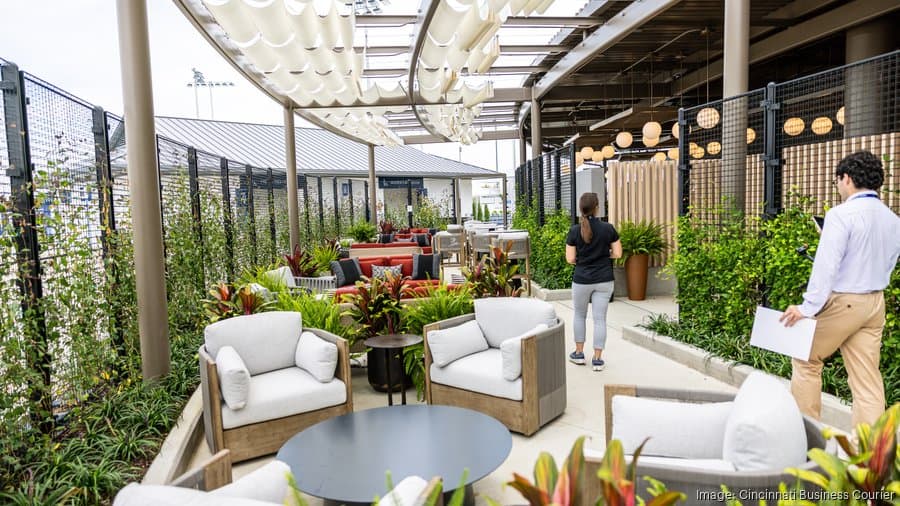
The Cincinnati Open has nine premium hospitality and seating options, from the private Garden Club with celebrity chef Jet Tila's all-inclusive food programme to the single-session Fifth Third Advantage Club and the Grandstand Club on the secondary court. Full details on each package, including inclusions and availability, are in our Cincinnati Open hospitality listings.
Share Your Experience
Attended the Cincinnati Open? We want to hear about it. Add your review below or contribute a blog and help other fans plan their trip.
Last updated: April 2026. Know something we don't? Submit a tip and we'll add it to the guide.
Ready to book?
Pair this guide with a hospitality package.
Fan Reviews
Sign in to leave a fan review.
No reviews yet. Be the first fan!